
Most scaling problems aren't targeting problems. They're creative problems. If your ads aren't pulling attention in the first two seconds, nothing else matters.
Let's look at the formats dominating Meta right now and how top brands use them to stay ahead:
UGC that feels real
The best-performing ads don't look like ads. They look like someone showing you something they actually use.
Why it works: People trust people. When the creative feels like a friend's recommendation, belief spikes and resistance drops.
Meme & overlay style
Meme frames, bold text, and quick captions are still some of the fastest ways to grab attention on Meta.
Why it works: Meta is a noisy scroll. These formats deliver the point instantly, even if someone barely slows down.
Interface-style ads
Think product pages, chat mockups, or search results. Familiar layouts that people already know how to read.
Why it works: The format does the thinking for them. When the layout feels familiar, the message lands faster.
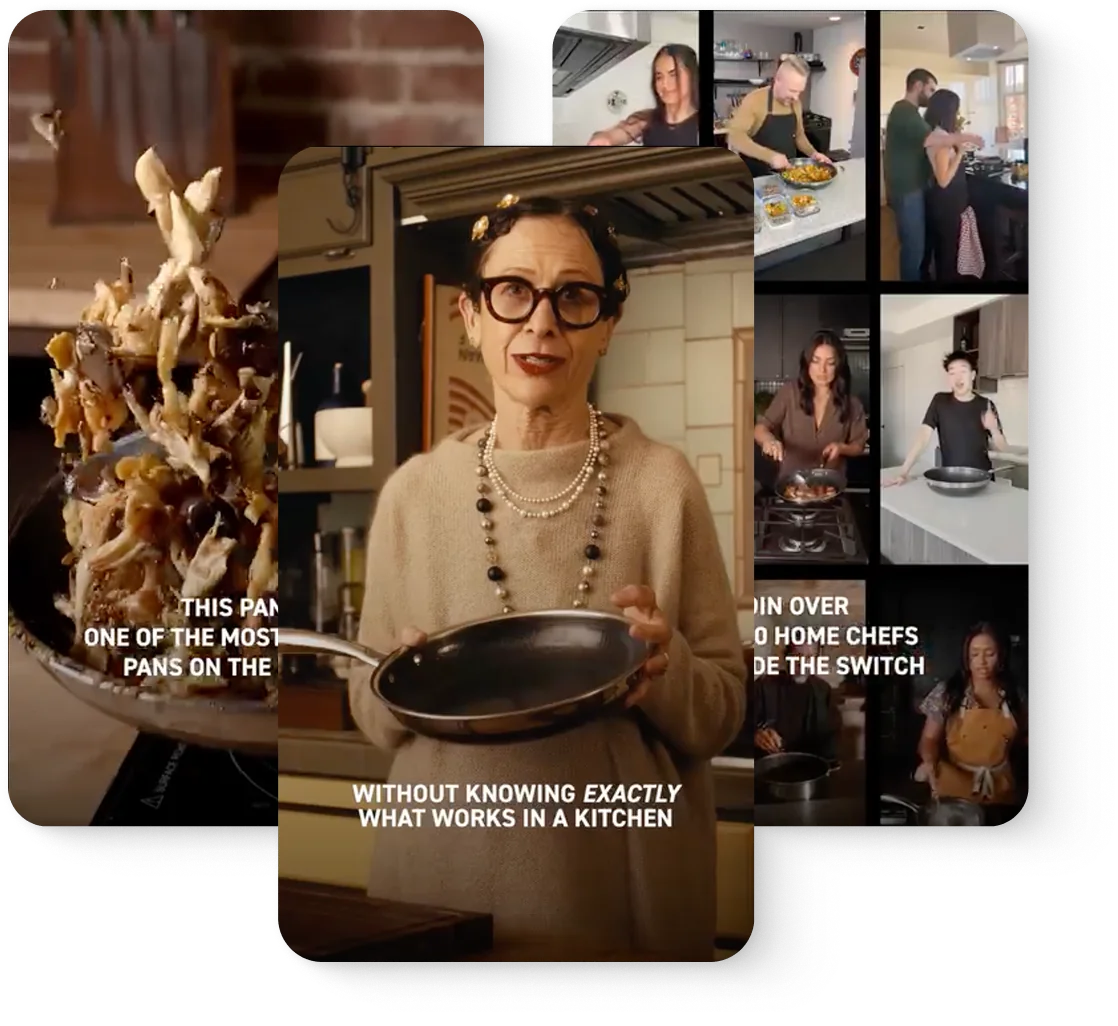
Here's a real example ☝️
Hexclad ads show exactly what high converting creative looks like on Meta. It feels real, it shows the product in action, and the benefit is clear the moment you press play.
The chef's simple walkthrough plays like authentic UGC even though it carries expert credibility. The close up demo and natural delivery build trust fast.
The supporting proof like reviews and warranty adds confidence without slowing the viewer down. The message is quick to understand, and the path to action is clear. This is the kind of creative that stops the scroll and drives results because it feels honest and easy to believe.